

November marks the beginning of the holiday season when we spend a lot of time in the kitchen preparing food for family and friends. Cooking and meal preparation are important skills to have when you want to impress your guests with your roast beast, but it is also an important part of emergency preparedness.
Consuming warm food and drink helps maintain your body temperature in cold weather. Cooking can be used to purify water, to clean dishes and laundry, and to sterilize medical equipment.
If the power or other utilities are out during the warmer months, it’s an easy thing to prepare and heat meals outside. What if there is an outage during the colder months or during a storm? Do you have the resources and the knowledge to safely cook in your home without your oven, stove, or microwave?
Safely cooking indoors without modern conveniences can be a problem if you haven’t made plans and preparations beforehand. Fire, smoke, and toxic carbon monoxide (CO) issues prevent you from using your BBQ grill or camping stove indoors, including in garages and under carports. The high wattage of your stove or even a hot plate is beyond what many generators can handle. So what else can you do?
Indoor Fire Safety
Remember that anytime you have an open flame or other heat source, there is a real possibility of fire. Before we discuss indoor cooking options, let’s review some basic fire safety for indoor flames and heat sources. Have smoke and CO alarms on all floors of your home, especially in the sleeping areas. Test them monthly, replace batteries every six months, and replace the unit every ten years.
Keep anything flammable or combustible at least three feet away from any heat source. Do not set a heat source on anything that can burn or catch fire. When cooking or attending to the heat source, roll up sleeves or wear short sleeves. Do not have loose and flowing clothing that could brush against the hot object and catch fire. Never leave an open flame unattended, especially around children or pets, and never go to sleep when there is an open flame.
Be sure that fire extinguishers and fire blankets are easily accessible, and know how to properly and safely use them. A bit of preparation and prevention can save a life.
If you feel uncomfortable or are unsure how to safely use any cooking equipment, don’t use it until you learn how or the appropriate safety measures are in place.
Wood-Burning Fireplaces and Stoves
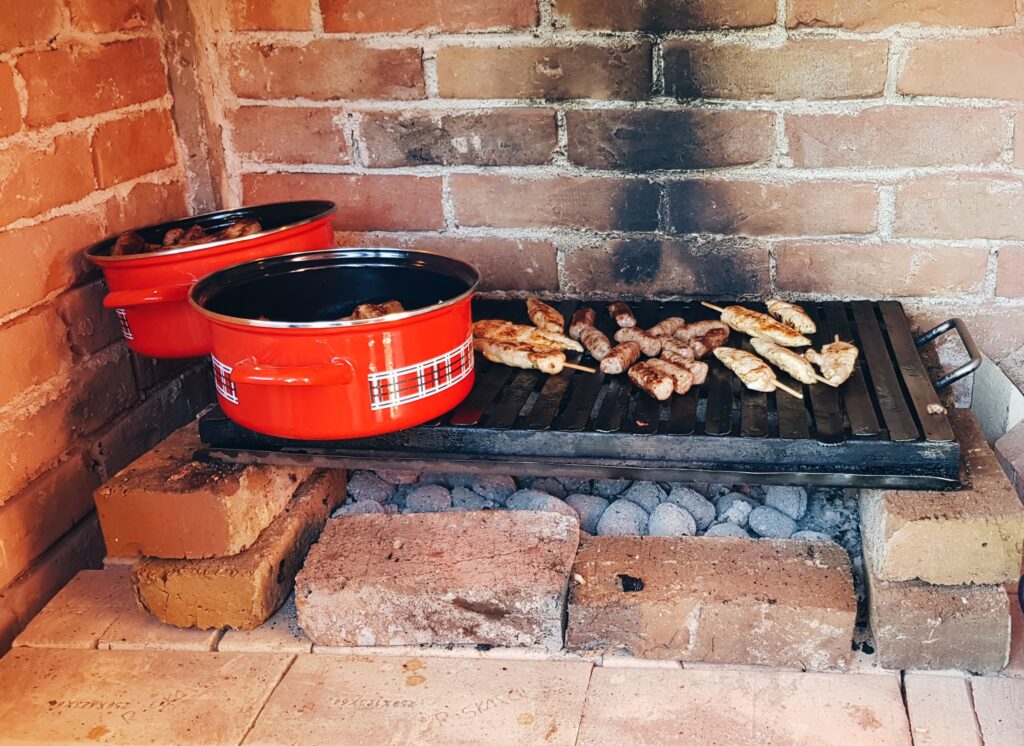
When gas and electricity are out, a wood-burning fireplace or a wood stove are great for heating your home during a utilities outage in the colder months. If done safely, you can also use them for cooking. Keep the fireplace screen in place while there are still flames in the fireplace and don’t cook until the fire has burned down to coals. Use fireproof gloves or fireplace tongs to carefully pull back the screen for cooking. Be aware that it is still possible a hot ember could pop out. If it does, be ready to quickly put it back in the fireplace with your gloves or tongs.
Cook hot dogs, marshmallows, or other small pieces of food over the fire like you would outside over a small campfire. If you have a large enough fireplace, you can cook inside it with a Dutch oven, with foil dinners, or by using a reflective oven.
Wood stoves get hot enough on the outside surface to cook using your pots and pans, or to boil water in a kettle. Remember you can’t regulate the temperature like you can on your regular stovetop, so be attentive when cooking to prevent burning food.
If a wood-burning fireplace or stove are an option for you, be sure to keep a large supply of wood for fuel. Fireplaces and wood stoves need to be serviced and cleaned yearly, even if they have not been used. Also note that gas-burning fireplaces cannot be used to burn wood, even if the gas is shut off. They are designed to safely burn only natural gas.
Chafing Gel Fuel and Candles
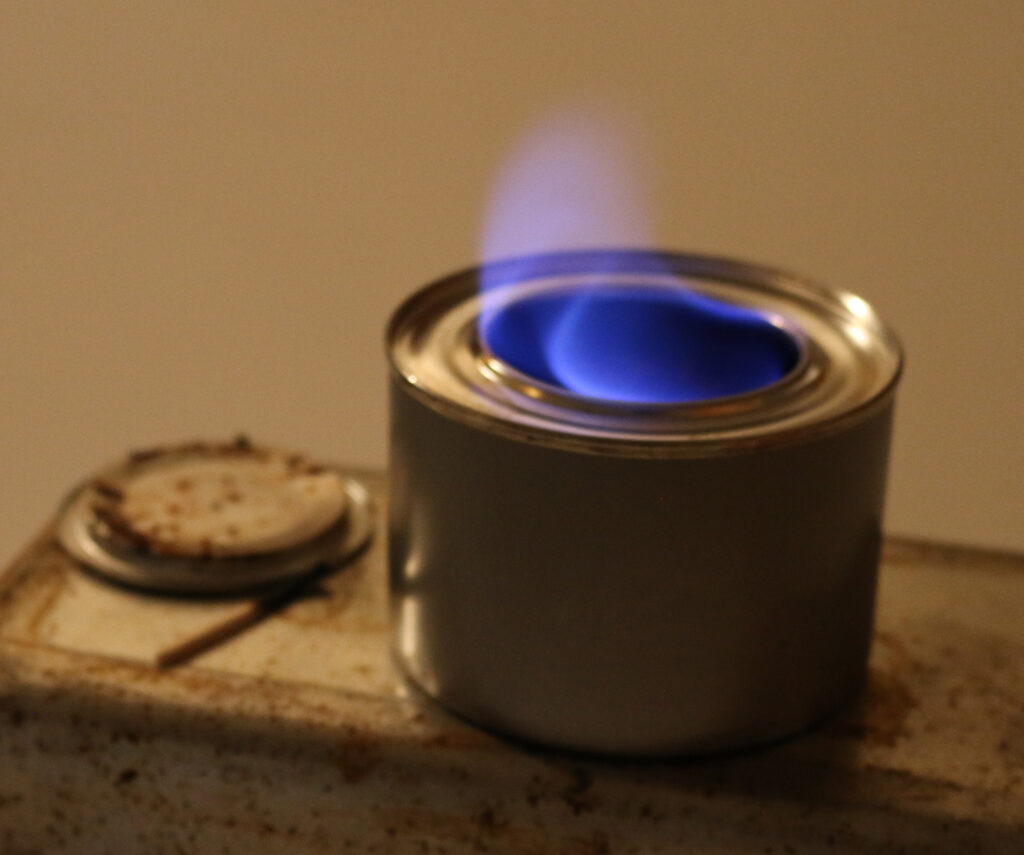
Chafing gel fuel is lightweight, small, good for a disaster supply kit, and safe for indoor use. It’s easy to light, safely heats small amounts of food, and is easy to extinguish. It comes in cans and is often used in buffets for keeping dishes warm. You’re not going to cook a big meal on it, but it works well for boiling small amounts of water for dehydrated or freeze-dried meals and for cooking small amounts of food.
Chafing gel is used by opening the can and touching a lit match to the gel. You may not be able to see the flame, but you can feel the heat and hear the gel popping. To extinguish the flame, lightly put the lid over the opening of the can until the flame goes out, then push the lid down tight to prevent the remaining gel from drying out. If the gel dries out, it will not light and is no longer good.
Emergency candles can also be used to cook with the added benefit of providing light. They don’t put out a lot of heat, but are sufficient for warming small amounts of food and boiling small cups of water. Keep candles in your emergency supplies and in disaster supply kits.
Chafing gel fuel and candles do not produce toxic carbon monoxide (CO), but they do burn oxygen and produce carbon dioxide (CO2). Make sure you have adequate ventilation in the room by cracking a door or window to let in fresh air.

Soda Can Stove
You can make different kinds of cooking equipment from materials found around the home. A soda can stove is made from three soda pop cans and uses rubbing alcohol as a fuel source. It can be used indoors or outdoors to cook small amounts of food. It’s lightweight and great for backpackers and in emergency kits. Find instructions on how to make your own soda can stove on the Be Ready Utah website.
Remember, do not bring propane or charcoal grills into your home or even into your garage. Most camp stoves use either propane or butane. Check with the manufacturer, but most camp stoves are NOT to be used indoors either.
There are many different options for cooking and preparing food during an emergency or even just if the utilities are out. Warm food is good for your physical and emotional health, but it must be done safely. Learn what works, how it works, and what does not work for your situation. Plan and practice your indoor cooking skills now when it’s recreational, not life-dependent.
Visit BeReadyUtah.gov for more information on emergency cooking and what cooking supplies to include in your disaster supply kits and other emergency kits.
Do This:
🍳Gather cooking equipment and keep it in working order.
🪵Safely store cooking fuels (charcoal, wood, propane) according to local regulations.
🔥Learn how to safely build, start, and put out a fire using a variety of different starting and extinguishing methods, then practice.
🥫Build additional cooking supplies like a solar box oven or soda can stove.
Videos: Watch and share with someone you care about
- PrepCast: Indoor Emergency Cooking (13.5 min)
Printable brochures: Read and share with someone you care about
Subscribe to receive the Be Ready Utah newsletter.