

Utah is a desert and we’ve been in a drought for years on top of that. We love it when the monsoon season comes and brings rain to our parched land. Unfortunately, sudden and intense precipitation on dry ground means flooding and flash flooding. Even worse, areas with a wildfire within the past few years are susceptible to debris flow since the scorched earth does not absorb water very well. We’ve already seen this happen through different areas of the state in just the past few weeks.
This September, being National Preparedness Month, we would like to go through the basic tenets of emergency preparedness. These tenets are Be Informed, Make a Plan, Get a Kit, and Get Involved. For this example, we’ll apply them to flooding hazards. You can follow the same steps we go through for preparing for other potential hazards in your area as well.
The national theme this year is “Preparedness Starts at Home,” so we’ll focus on family and home flood preparedness, but the same principles apply at work, school, and wherever else you spend time.
The first step is to determine if the hazard, in this case flooding, is possible where you live. We know that wherever it rains, it can flood. The possibility increases if you live in a flood zone, near a body of water, or near sloping ground that has experienced wildfire in the last few years. So, during spring runoff, late summer monsoon season, and any other time it may rain, you are at risk of flooding.
Learn what impacts flooding can cause. Flooding can contaminate food and water supplies. It can block or destroy transportation routes and homes. Utilities like water, gas, electricity, and sewer can be disrupted.
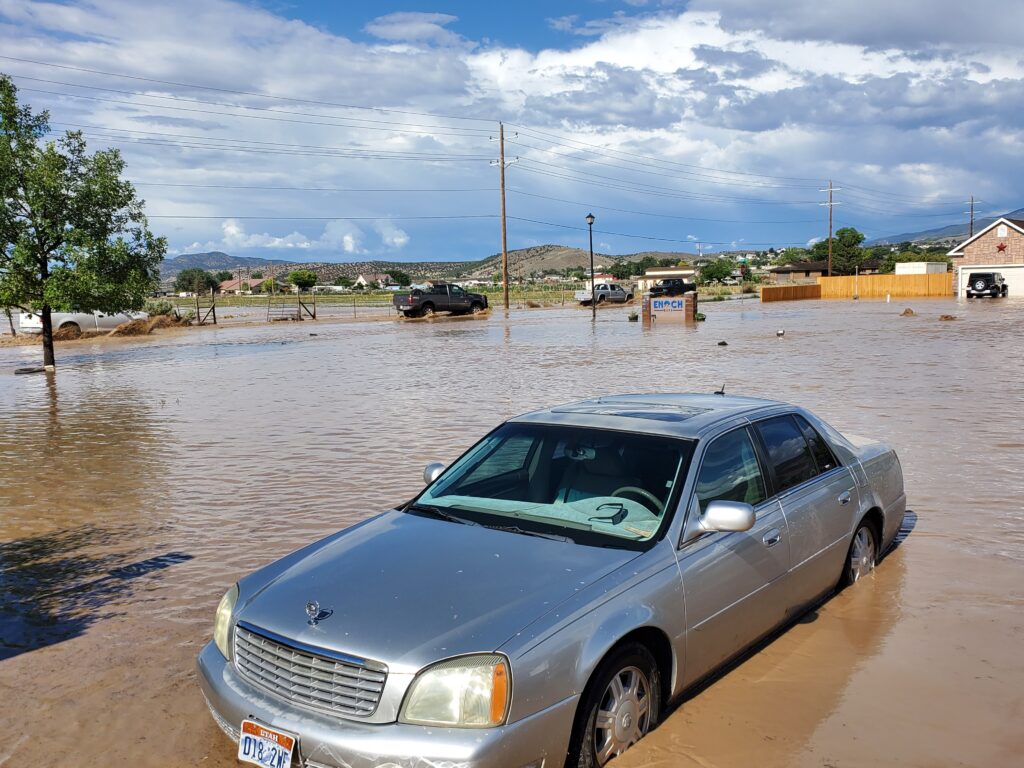
Next, learn the protective actions for flooding. Protective actions are the immediate actions taken to protect yourself and others from the initial impact of a hazardous incident. A good rule of thumb when you come to flood water across a path or roadway, “Turn around, don’t drown.” You don’t know what’s beneath the water or if the road is even there. Even just six inches of flowing water can cause you to lose your footing or cause a vehicle to lose control. If the water begins rising where you are, or there is a good possibility that it will, evacuate to higher ground.
Finally, know what sources of emergency information are reliable. Before an emergency, learn more about emergency preparedness for flooding from websites like BeReadyUtah.gov and Ready.gov. Listen to weather reports to know if a storm that could cause flooding is likely in your area. During an emergency, follow local fire/rescue, law enforcement, and emergency management agencies on social media for accurate and up-to-date information for your area.
Now that you know what you could be facing, you’re ready to make plans on what to do if/when this hazard could occur.

Communication plans: How will you give and receive information in an emergency? You use your phone for most day-to-day communication, and it may or may not function in an emergency situation. Have emergency contacts and family, or other emergency text groups, already set up in your phone. Inform your contacts if flooding is possible and make any last-minute plans if the need to evacuate arises. Listen to the radio or television for emergency alerts and for instructions from local authorities. If you are able, purchase a weather band radio. Know the emergency alert systems in your community.
Reunification plans: What if the incident happens when you’re not home? What if your neighborhood is evacuated? Have a predetermined emergency meeting place outside your neighborhood.
Shelter plans: In most emergencies, the best place to be is at home. If your home is safe, it is still possible that your access to outside resources can be hampered if floods block transportation routes. Have the knowledge and supplies to keep your household and family members safe, healthy, and dry. During times with possible flooding, if there is anyone with a bedroom in the basement, have them sleep on an upper floor. Flood water and other debris can break through a basement window and pile up in front of a door, making it impossible to escape.
Evacuation plans: If a flood in your area is imminent and an alert goes out to evacuate, do so quickly, following the suggested directions from authorities. But remember that one of the first things often lost in an emergency situation is communication. Power may be out, phone lines and cell towers could be down, or an alert may never even go out. Be situationally aware. If your location is unsafe, will become unsafe, or evacuation routes will become unsafe, don’t wait for an alert. Grab your family, pets, disaster supply kits, and take the initiative to evacuate yourself.
Make additional plans as needed if you have anyone in your family or household who needs help in doing what is necessary to be ready for disasters. You may even find yourself dependent on others for assistance. The steps of preparedness are the same for everyone, even though they are applied differently depending on each person’s unique needs and abilities.

Also know that flooding from broken pipes may be covered by homeowner’s or renter’s insurance, but flooding as a natural disaster is not. That kind of insurance is a separate policy that takes 30 days to go into effect. Talk to your insurance agent to find out what your coverage is. Learn more from the National Flood Insurance Program.
This is usually what people think of when they think of emergency preparedness. It’s the checklists. Gathering things, buying things, storing things, inventory, rotation, updating, and upgrading. Don’t be concerned about exactly following other people’s emergency lists. Look at them for ideas of how to cover your basic needs. Then create your own lists based on needs, abilities, and those of your family members.
If the flood causes you to stay at home, you’ll need to have the basics of water, food, shelter, and the other 12 areas of preparedness already in place. When the storm or the emergency hits, it’s too late to make a run to the grocery store. This doesn’t need to be a big investment. Most things you need, you probably already have at home.

If you have a disaster supply kit for each person in your household, you can use that to cover your needs at home for a few days. It’s not exclusively for evacuations, but if you need to evacuate, it’s nice to have it already gathered in a portable bag and stored for quick access.
Get Involved
Depending on the severity of the flood, there may not be outside help for days, weeks, or longer. That is why it’s so important to come together with our friends and neighbors before, during, and after a disaster happens. We are all in this together. None of us can do it on our own.
Before a flood or any other emergency happens in your neighborhood, develop a good relationship with those who live around you. Our neighborhoods and communities are our support structures. Reach out to others in your sphere of influence and help them on their road to being disaster-ready.

During a flood, check on neighbors and others who may need extra help. Make sure they are safe and comfortable, or help them evacuate if necessary. Many communities need help filling sandbags if there is a high potential for flooding. Check community social media boards or with your local emergency manager to see how you can help.
After a flood, see if your community is calling for volunteers to help with cleanup. Know your physical and emotional limits. Be sure to stay safely within them. Know what is expected of a volunteer and bring your own safety equipment, snacks, and water. Dress appropriately for the elements.
Be informed, make a plan, get a kit, and get involved are the basic steps to take in getting ready for a flood or any other emergency. Preparedness really does start at home. Get your own preparedness plans and supplies in order first. Just like the flight attendant instructions on a plane, putting the oxygen mask on yourself first allows you to then help others. If you are confident that your home is safe, you can then help others who may have been hit harder than yourself.
You’re never going to be perfectly prepared. But every step you take for yourself or helping others increases your chances of not only surviving a disaster, but getting through it with health, dignity, and peace of mind. Even the most basic preparations can turn a disaster into an emergency, an emergency into an inconvenience, and an inconvenience into just another day.
Take it a step at a time. You can do this.
Visit BeReadyUtah.gov for more information on individual and family disaster and emergency preparedness. Then share what you learn with others.
Do This:

Be Informed about

Make a plan for

Get a kit and supplies for
- Disaster supply kit
- Home emergency supplies
- Vehicle emergency kit
- Everyday carry kit
- School emergency kit

Get involved with
- Community Emergency Response Team (CERT)
- Community prep
- Social media
- Help family and friends
- Donate responsibly
Videos: Watch and share with someone you care about
- Be Ready Utah Webinar: Emergency Preparedness 101 – the Basics (91 min)
- Be Ready Utah PrepCast: Flood (10.5 min)
Printable brochures: Read and share with someone you care about
- 4 Tenets and 12 Areas of Preparedness
- Disaster Supply Kit: Individual, Infant, and Pet
- Preparedness Basics in 52 Weeks
- Utah Flood Risk Booklet
Subscribe to receive the Be Ready Utah newsletter.